

Alopecia areata
Sudden patches of hair loss that need a medical scalp assessment.
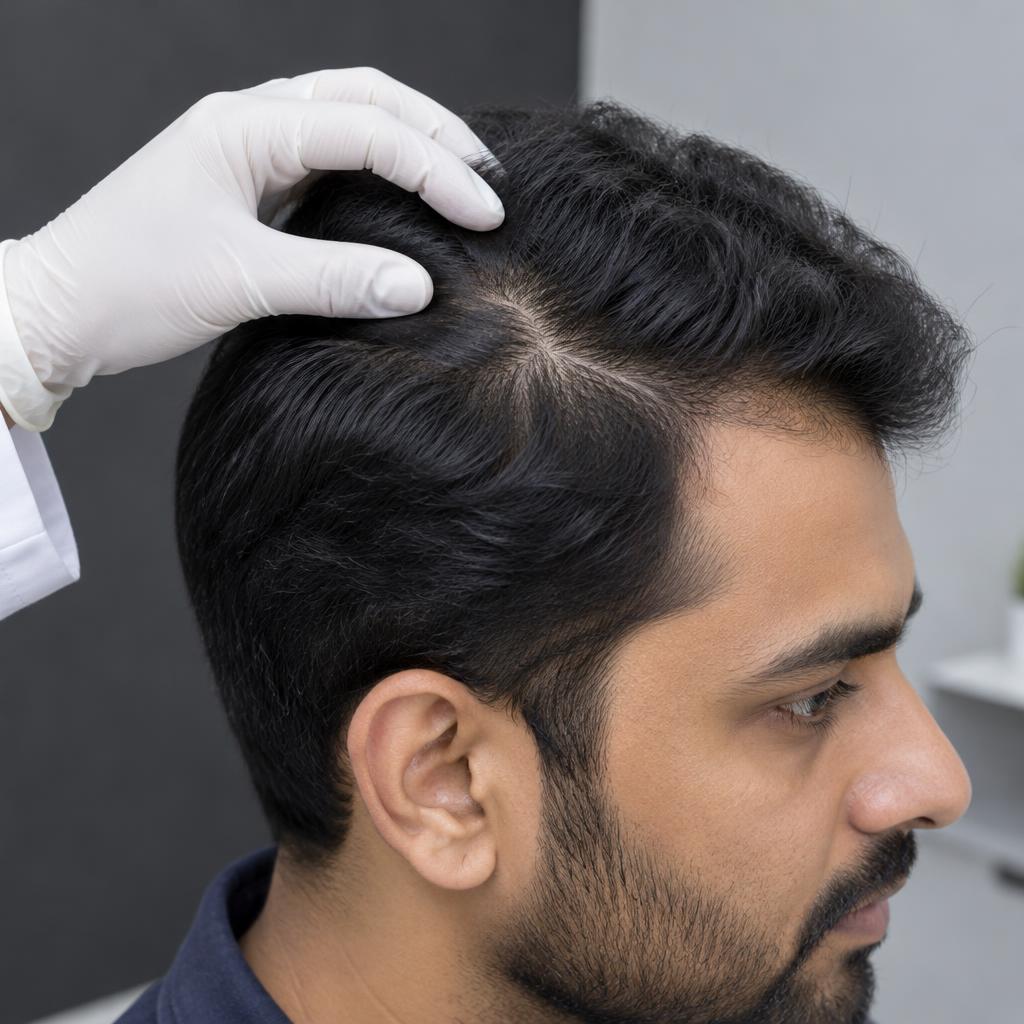
Discuss Your ConcernIllustrative image · not a Spectra patient or treatment result
Alopecia areata:
assessment comes first.
Alopecia areata is an immune-mediated cause of hair loss, often appearing as smooth patches. It may also affect eyebrows, eyelashes, or body hair.
What we assess
A dermatologist can assess the pattern, nails, other symptoms, and whether additional testing is appropriate.
A plan, not a preset procedure
Management is diagnosis-specific and may involve medicines, monitoring, or referral. Cosmetic hair restoration is not the first-line answer for an active autoimmune condition.
Important considerations
Regrowth is unpredictable and relapses can occur. A transplant or injectable should not be assumed suitable for alopecia areata.
Information here does not replace a personal diagnosis. Treatment suitability, benefits, risks, and recovery vary; choosing no cosmetic treatment remains a valid option.
The right assessment before treatment
A cosmetic procedure may not be appropriate. Start with medical assessment and a discussion of conservative care or specialist referral.

Personal care. Informed decisions.
Clinical assessment
Ask for the treating clinician’s name, relevant qualifications, registration, and experience with your procedure.
Treatment & aftercare
Confirm the facility’s registration, anaesthesia arrangements, emergency support, and written aftercare plan.
Your choice
Expect an honest discussion of risks, alternatives, complete costs, and time to decide without pressure.
Treatment choices require an individual clinical assessment. Treatment illustrations do not show Spectra facilities or patient results. Confirm the treating clinician’s registration and procedure-specific experience during your consultation.
Let’s understand what matters to you.
Explore suitability, risks, recovery, and the full cost before making a decision.
Plan Your ConsultationOnline booking is not yet available. No appointment is confirmed here.
Related concerns
All concernsFemale pattern hair loss
Gradual thinning, often around the parting, requiring diagnosis and a long-term plan.
Stress & nutrition-related hair thinning
Increased shedding after illness, stress, or dietary changes needs a cause-based assessment.
Lichen planopilaris (LPP)
An inflammatory scalp condition where early dermatology care matters to protect remaining hair.